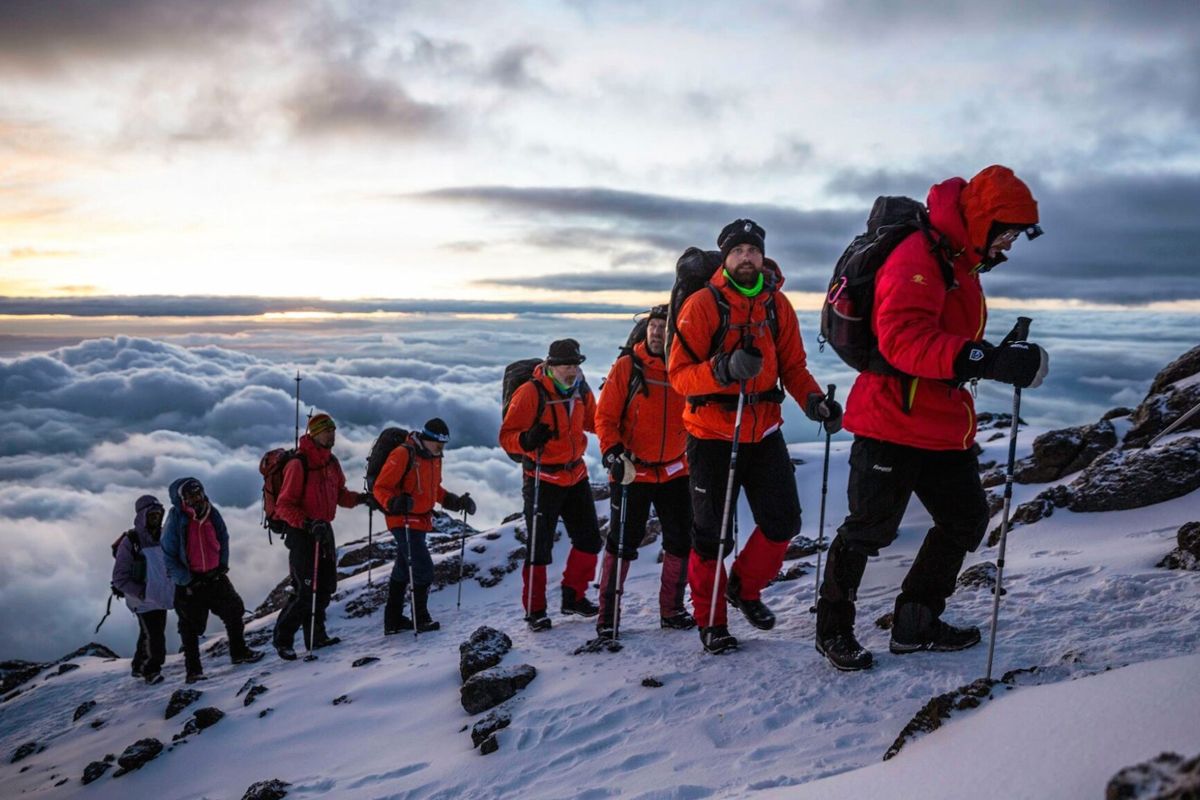
Kilimanjaro is a walk, not a climb. You need no ropes and no technical skill. What stops people is altitude, and the single biggest factor in reaching Uhuru Peak at 5,895 metres is how many days you spend going up.
Add one day to almost any route and your odds improve noticeably. Here is how the main routes compare.
At a glance
| Route | Days | Rough success rate | Character |
|---|---|---|---|
| Machame | 6 to 7 | 85% on 7 days | Popular, scenic, good acclimatisation profile |
| Lemosho | 7 to 8 | 90% on 8 days | Quiet start, best scenery, high success |
| Northern Circuit | 9 | 95% | Longest route, best acclimatisation, fewest people |
| Rongai | 6 to 7 | 80% | Approaches from the drier north, gentler gradient |
| Marangu | 5 to 6 | 50% on 5 days | Huts instead of tents, too short for most people |
| Umbwe | 6 | Low | Steep and direct, for experienced trekkers only |
Machame
The most used route on the mountain, and popular for good reason. It climbs high and sleeps low at Barranco, which helps your body adjust, and the scenery through the Shira Plateau and up the Barranco Wall is superb.
Take the seven day version. The six day version cuts the acclimatisation day that makes the route work.
Lemosho
Lemosho starts on the western side and stays quiet for the first two days before joining the Machame path. The longer approach means more time above 3,000 metres before summit night, which shows in the success rates.
If your budget stretches to eight days, this is the route we recommend most often.
Northern Circuit
The newest and longest route, looping around the quiet northern slopes over nine days. It has the highest success rate on the mountain and you will see very few other groups.
It costs more simply because of the extra days of staff, food and park fees.
Rongai and Marangu
Rongai comes in from the north near the Kenyan border. It is drier, which makes it a sensible choice in the wetter months, and the gradient is gentle, though the scenery is less varied.
Marangu is the only route with dormitory huts, which appeals to people who dislike tents. It is also the shortest and has the weakest acclimatisation profile, and the five day version fails more often than it succeeds. If you choose Marangu, take six days.
What actually gets you to the top
- Days on the mountain, more than fitness or age
- Walking genuinely slowly, which is harder than it sounds
- Drinking three to four litres of water a day
- Eating even when the altitude kills your appetite
- A guide team that checks oxygen saturation twice daily and carries emergency oxygen
Common questions
Which Kilimanjaro route has the highest success rate?
The nine day Northern Circuit, at roughly 95 percent. Eight day Lemosho is close behind and costs less.
Do I need climbing experience?
No. Kilimanjaro is a long uphill walk with no technical sections. Reasonable fitness, good boots and the patience to walk slowly are enough.
How cold does it get on summit night?
Expect between minus 10 and minus 20 degrees Celsius at Uhuru Peak before sunrise, colder with wind. Proper layers matter more than anything else in your pack.