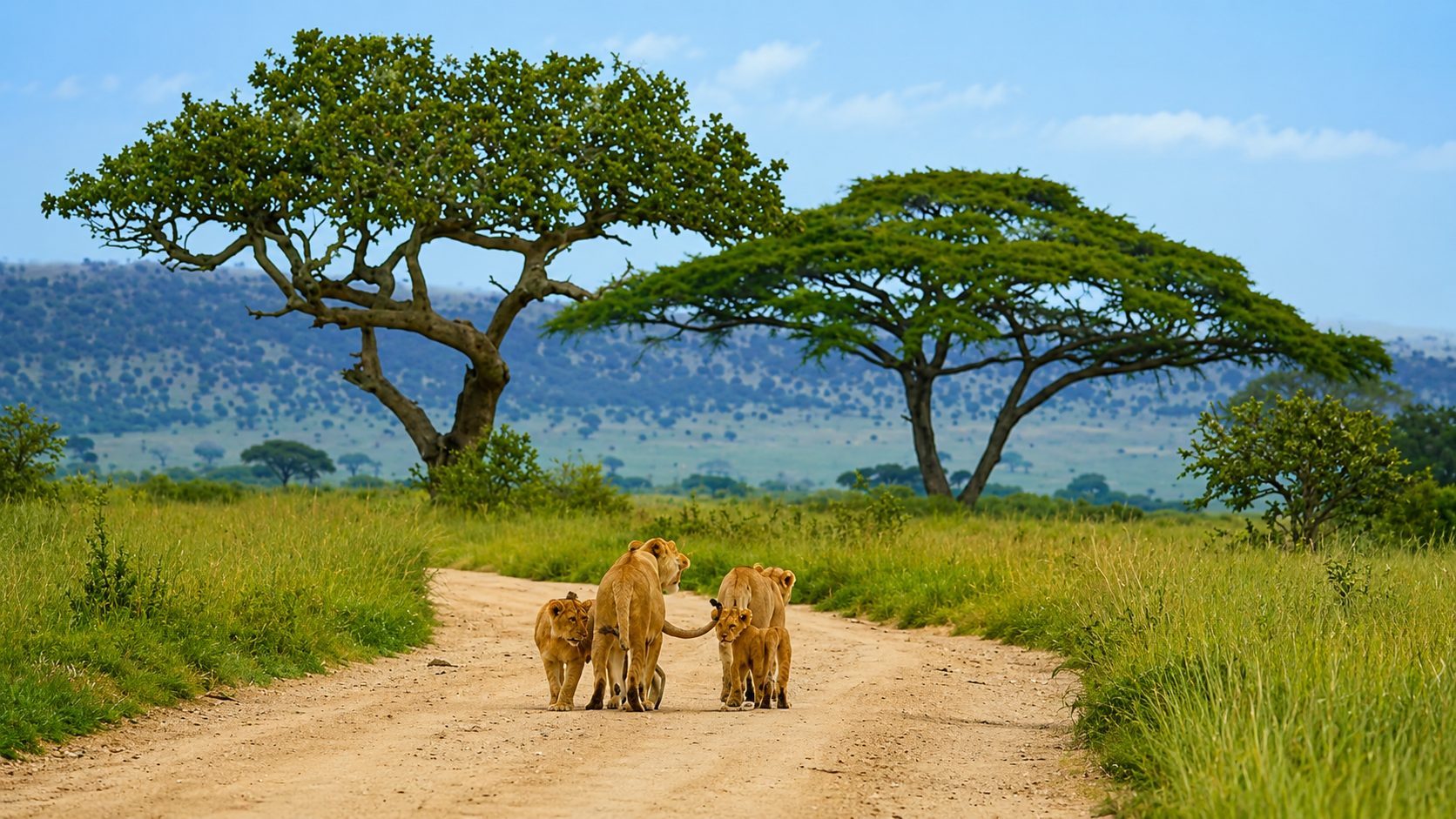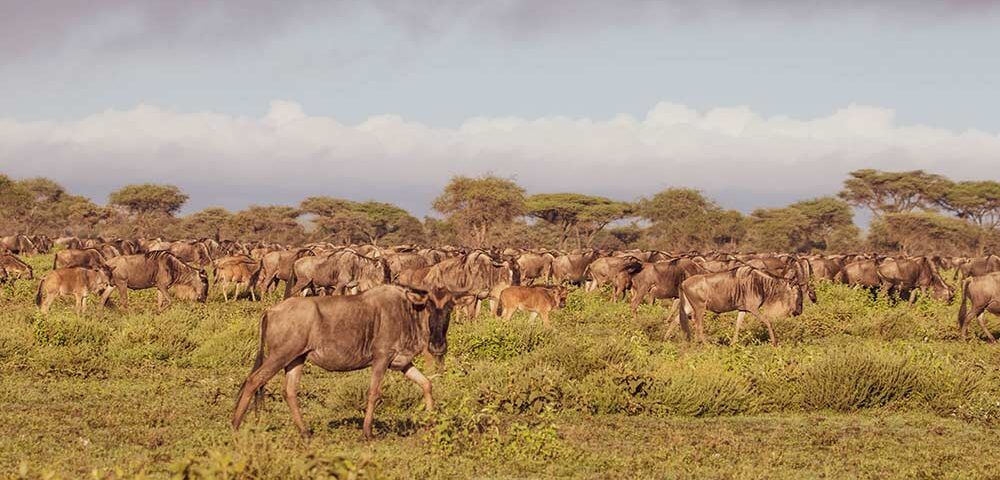
Around 1.5 million wildebeest, plus a few hundred thousand zebra and gazelle, move in a rough clockwise loop through the Serengeti and into the Masai Mara and back. They follow the rain, which means the timing shifts a little every year.
Nobody can promise you a river crossing on a given date. What we can do is put you in the right part of the Serengeti for the month you are travelling.
December to March: the southern plains and calving
The herds spread across the short grass plains of the southern Serengeti and the Ndutu area of the Ngorongoro Conservation Area. The grass here is rich in the minerals nursing mothers need.
Calving peaks in a tight window, usually late January to mid February. Roughly 8,000 calves a day are born at the height of it, and every predator in the ecosystem knows it.
- Stay: Ndutu or southern Serengeti
- Highlight: calving, cheetah and lion activity
April and May: moving north and west
As the long rains set in, the columns start drifting north west through the central Serengeti towards the Western Corridor. This is a quiet, green period with few other vehicles around.
The rutting season also happens around now, and the sound of hundreds of thousands of grunting wildebeest is something you do not forget.
- Stay: central Serengeti (Seronera)
- Highlight: rut, green landscapes, low prices
June and July: the Grumeti and the push north
The herds reach the Western Corridor and the Grumeti River. Crossings here are smaller and less predictable than the Mara ones, but the crocodiles are enormous.
By late July, the front runners are usually in the northern Serengeti near the Kenyan border.
- Stay: Western Corridor in June, northern Serengeti from mid July
August to October: the Mara River crossings
This is the scene everyone has seen on television. Herds gather on the banks of the Mara River, hesitate, then pour across while crocodiles wait.
Crossings are genuinely unpredictable. A herd can stand at the water for two days and then turn around. Plan at least three nights in the northern Serengeti to give yourself a fair chance.
- Stay: northern Serengeti (Kogatende area)
- Plan: three nights minimum, more if crossings are the goal
November: turning south again
The short rains pull the herds back down through the eastern Serengeti towards the southern plains, and the loop starts over. It is a fast-moving month and a good time to combine northern and central camps.
Quick reference
| Months | Where the herds usually are | What to look for |
|---|---|---|
| December to March | Southern Serengeti and Ndutu | Calving, predators |
| April to May | Central Serengeti moving west | Rut, green season, few vehicles |
| June to July | Western Corridor and Grumeti | Grumeti crossings |
| August to October | Northern Serengeti and Mara River | Mara River crossings |
| November | Eastern Serengeti heading south | Fast movement, short rains |
Common questions
Can you guarantee I will see a river crossing?
No honest operator can. The herds move on their own schedule. Staying three or more nights in the northern Serengeti between August and October gives you a realistic chance.
Is the calving season better than the crossings?
For predator action and photography, many repeat visitors prefer calving in February. The crossings are more dramatic in a single moment, but calving delivers action almost every day.
How many days do I need for a migration safari?
Five days is workable if you fly into the right airstrip. Seven days is more comfortable and lets you add Ngorongoro or Tarangire on the way.